Data Explorer
On this page you will learn about Data Explorer and the advanced features you have available to be able to analyze events in detail and make decisions on your Asset's performance.
What is Data Explorer ?
Data Explorer is a time series graphical chart that melds many of the Kelvin features and items into a seamless experience.
It is designed to allow you to analyze situations and to gather, compare and analyze a range of metrics recorded in the Kelvin to be able to quickly come to conclusions and take the necessary decisions.
Automatic Data Aggregation
Normally if you select Raw data, all the data will be shown in the Data Explorer.
To maintain system performance and Data Explorer readability, the Kelvin UI automatically aggregates data when large datasets or long time ranges are selected.
The automated aggregation feature is defined per client platform depending on how data is collected.
Click here to read more about raw and aggregated data.
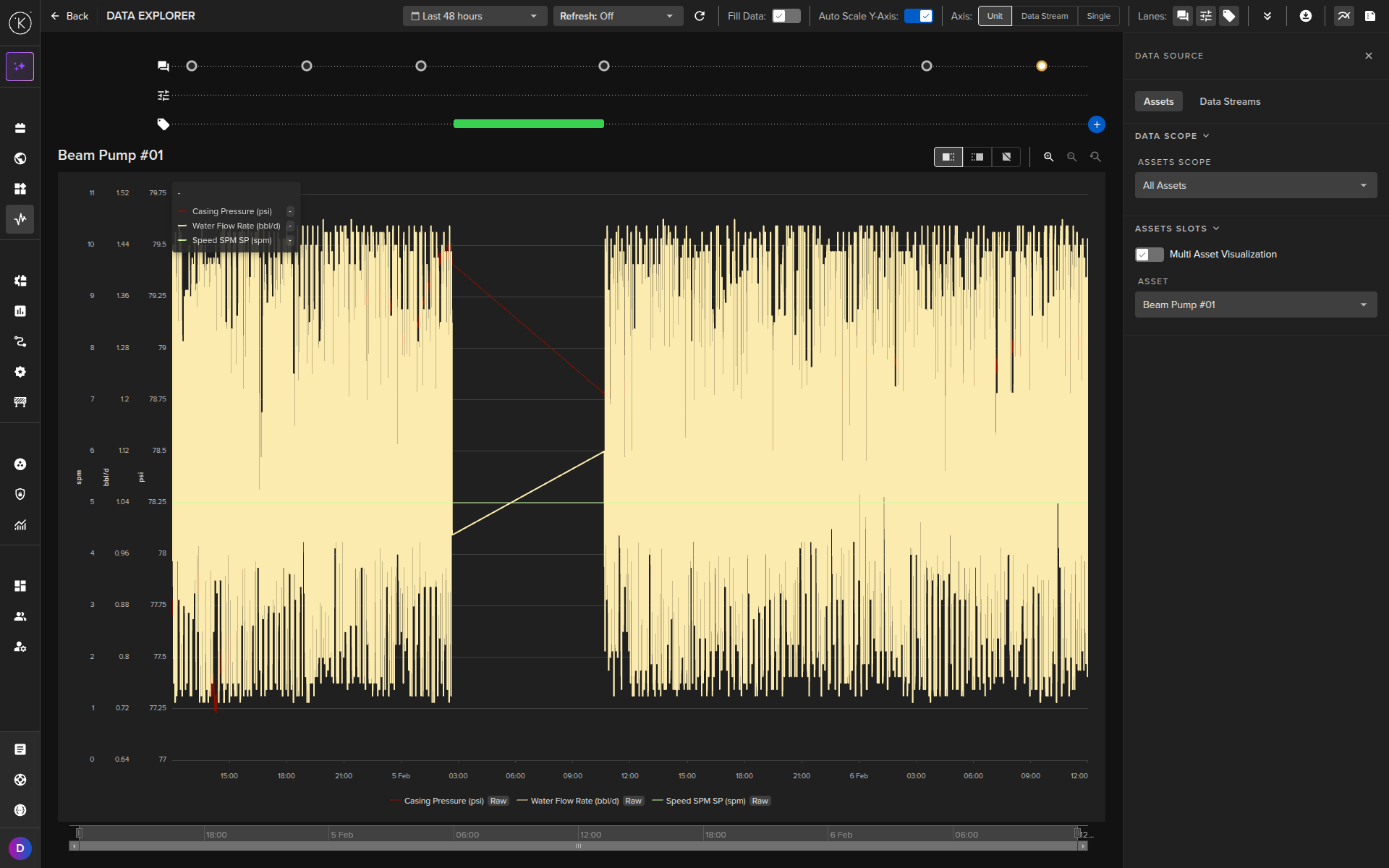
Basic Features
Data Explorer has all the usual features found in any standard time series analysis graph. These include;
- Time-based data line chart
- Multiple line charts
- Data selection
- Time selection
- Dynamic zoom on x and y axis
- Legend
- Mouseover data popup
- Download the data to a CSV file
Kelvin Features
But Data Explorer is much more than just another time series line graph.
It is tightly integrated with Kelvin and the industrial requirements for being able to see many parameters at the same time. This allows you to analyze the full picture of the industrial controls and come to quick decisions.
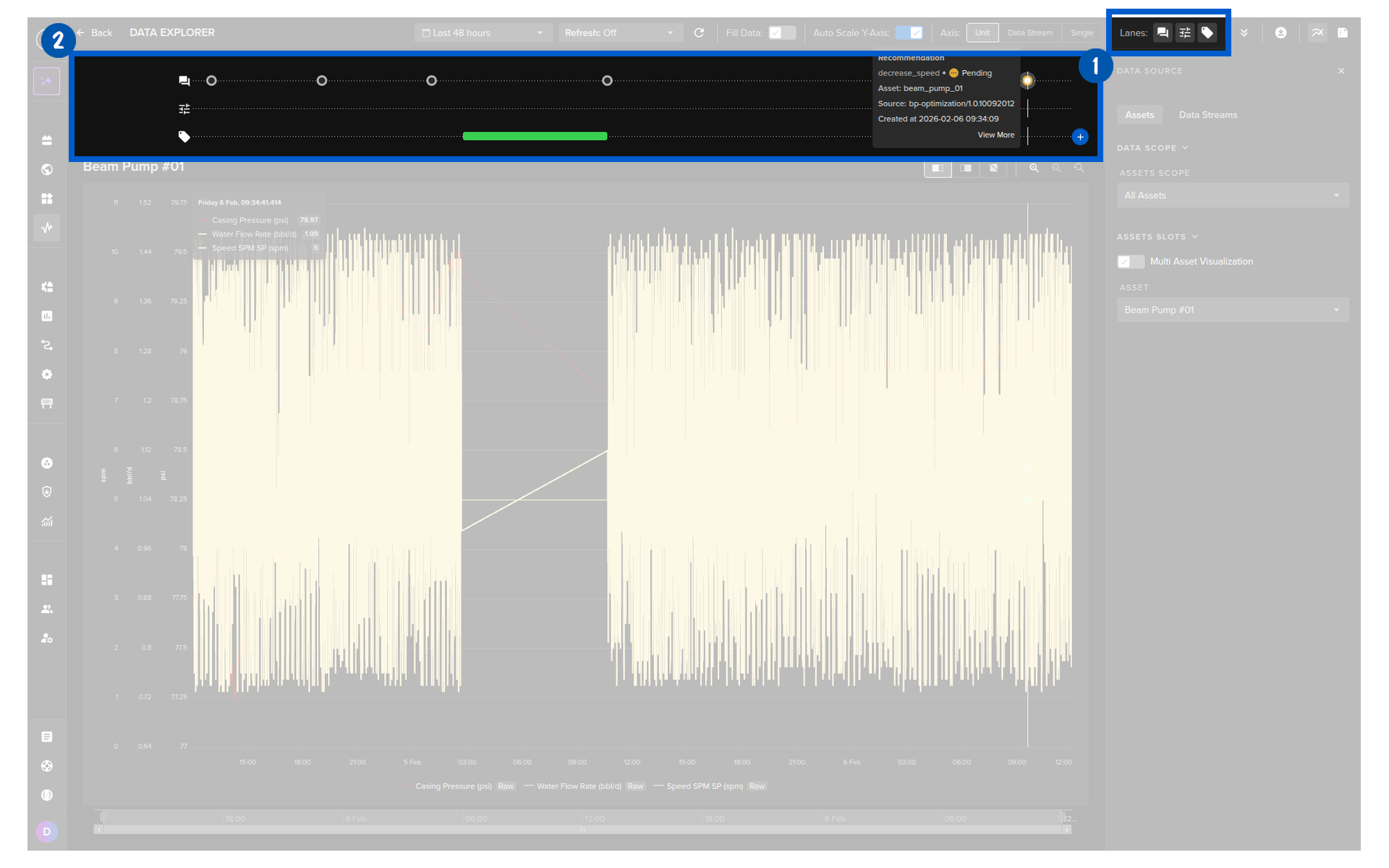
There are three types of events that are recorded and optionally displayed on the graph in the lanes; Tags, Control Changes and Recommendations.
Tags are an option for you to tag certain time locations for easy identification on the graph lanes at a later stage.
Control Change and Recommendation lanes are very useful to view when either have happened and you want to see what the effects were in the recorded data streams.
Note
By clicking on the icon you can show or hide each lane.
Hiding lanes gives more screen space for your charts.
To easily bring up your asset data, the graphs are linked to an Asset and any of its related Data Streams.
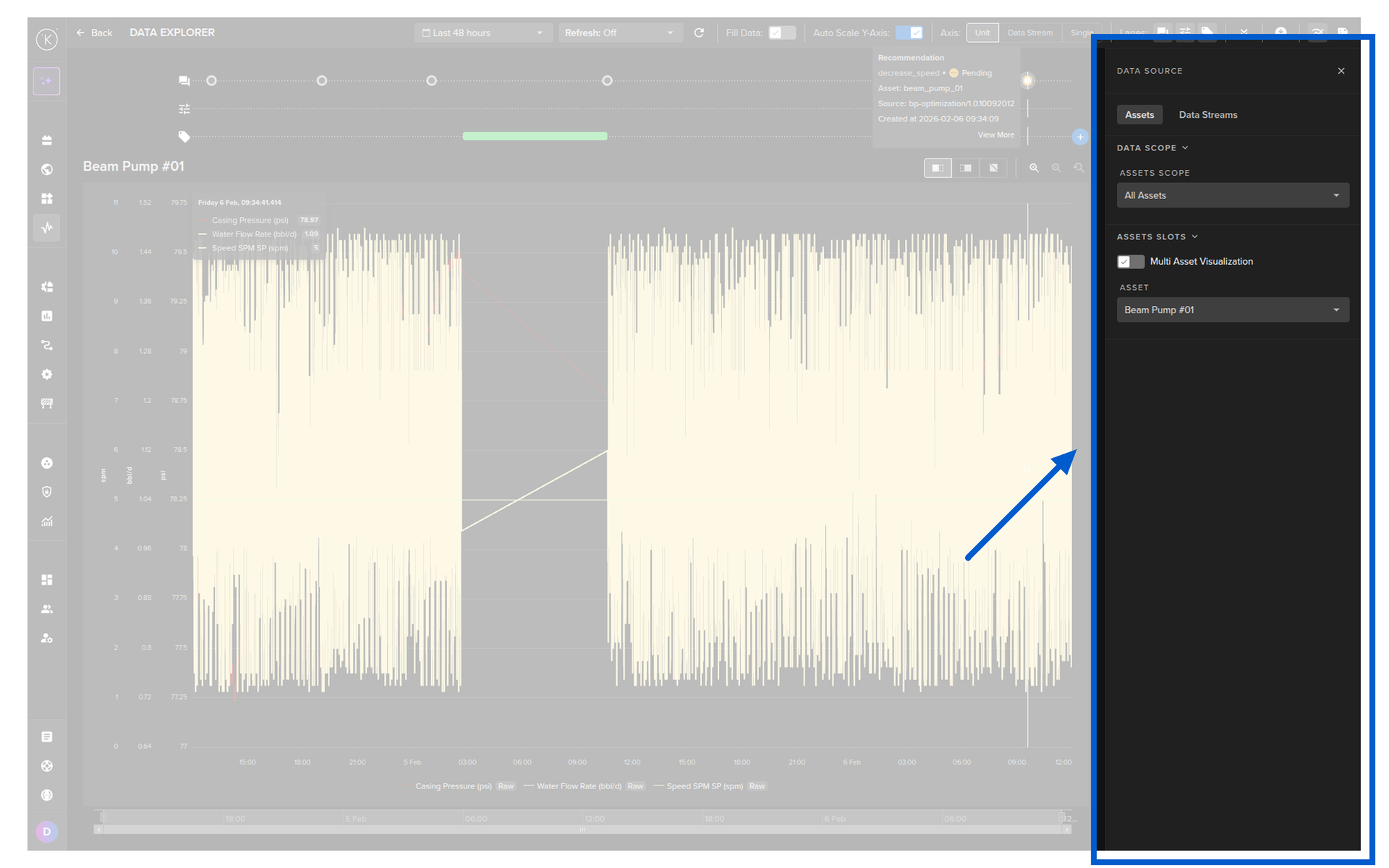
This makes it easy to quickly find the data to display rather than having to remember hundreds or thousands of metric names and trying to find them from a long list of options.
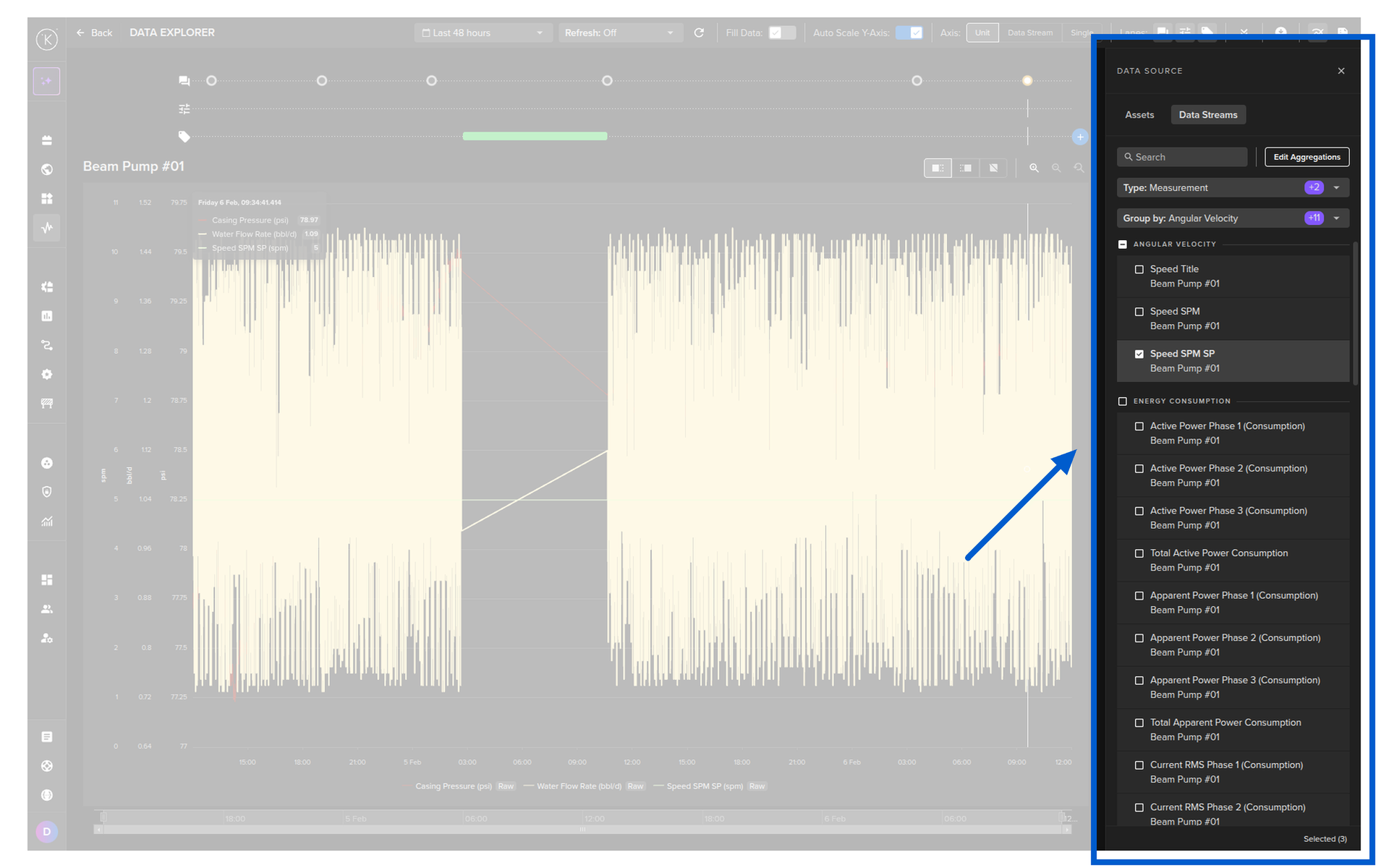
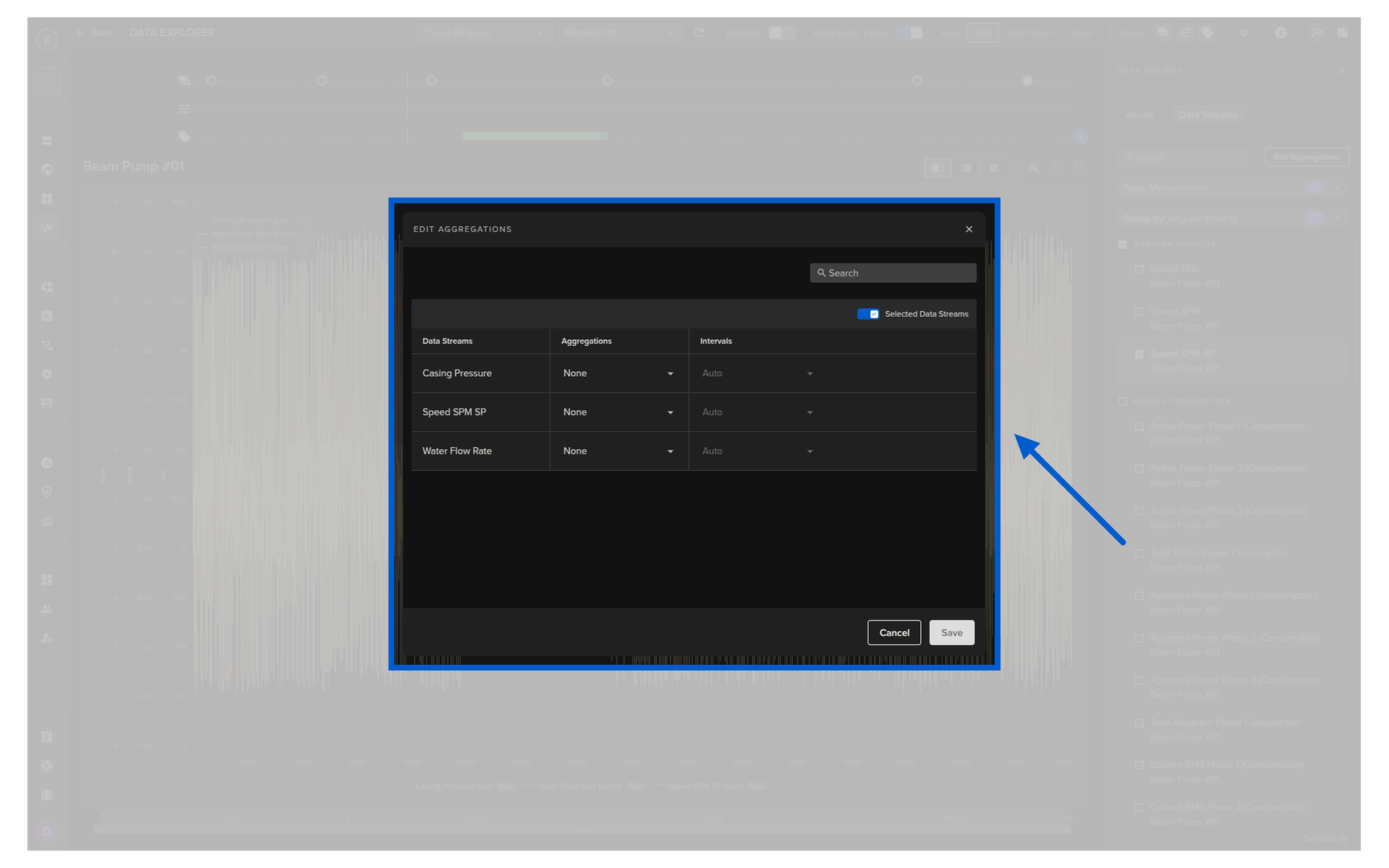
You can also optionally view the Data Stream values in an aggregated format over a defined period.
Aggregate options are; None, Average, Count, Maximum, Minimum and Sum.
Note
None means that the raw data will be used for the chart.
Check out the chapter below Raw Data View for more information about how raw data is displayed and when it is automatically aggregated.
Warning
The system will make every effort to follow the aggregations selected.
Only under extreme conditions, such as selecting minute intervals over a two-day range, the system may automatically adjust the interval to prevent large data updates that could freeze the browser.
You can use the Data Explorer for both real time monitoring or historical data analysis.
In real time monitoring mode, you can set the refresh rate of the graphs from 5 seconds to 1 hour.
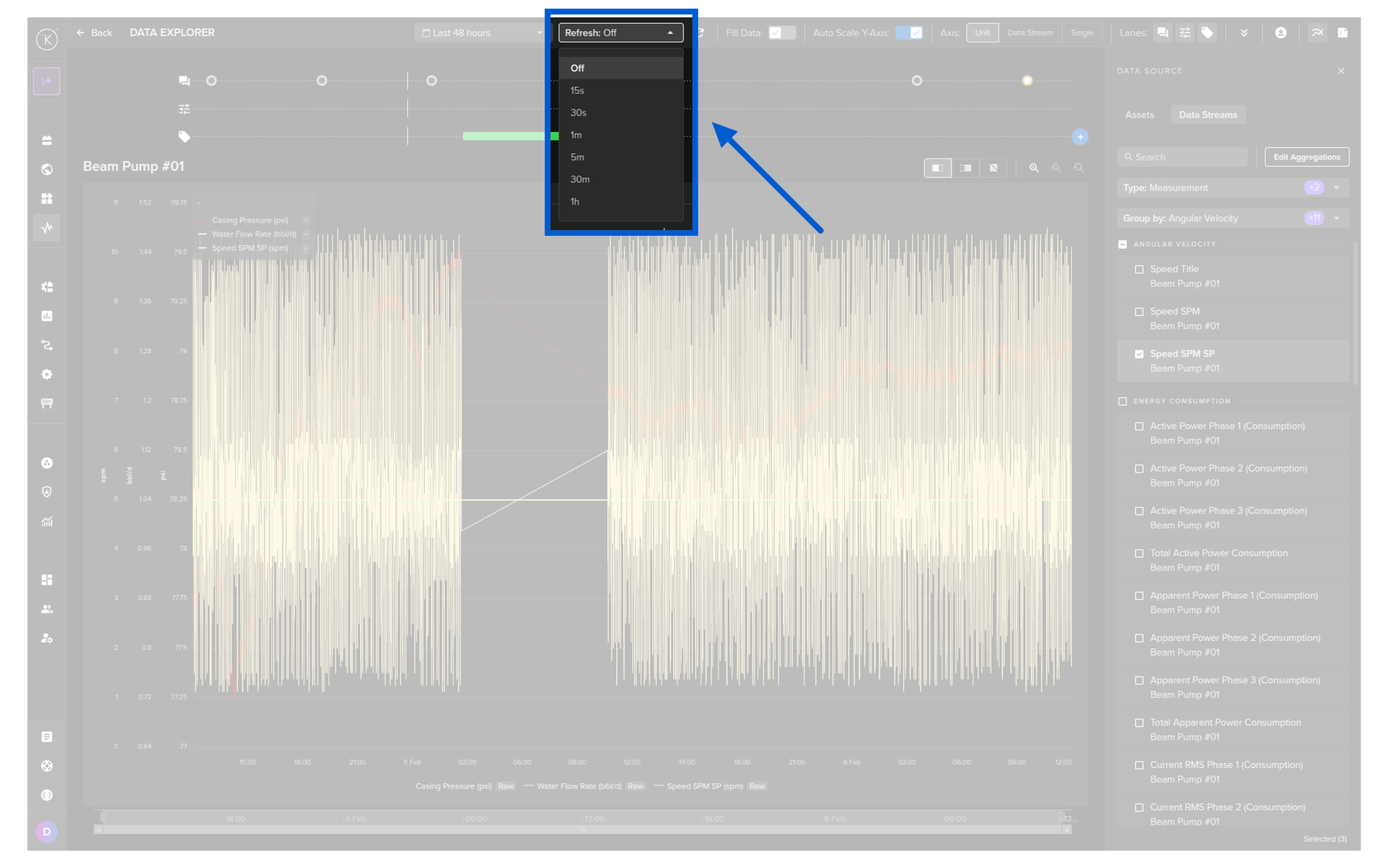
To revert to historical data analysis you can turn off real time monitoring by selecting Off.
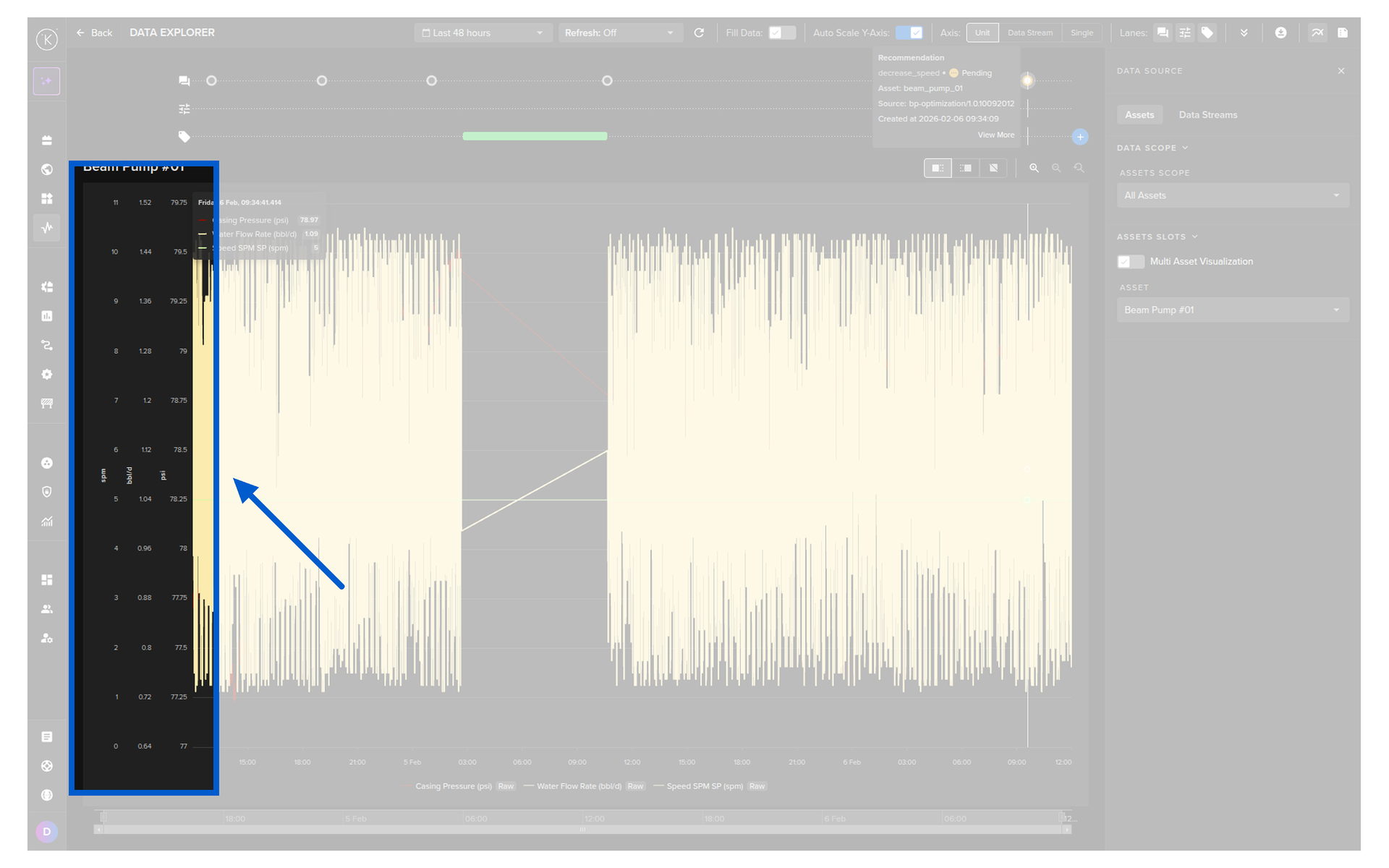
When dealing with different metrics, in many cases you will find the units of each metric will be very different.
For example you may have metrics for a AC Motor, where you record temperature (normally 60 - 200 degrees Fahrenheit), rpm (normally 1,000's) and flow rate (say 0 - 10).
With Data Explorer, you can have separate y-axis to have good visibility on each, rather than having one y-axis and the small numbers like flow rate a very small line at the bottom only.
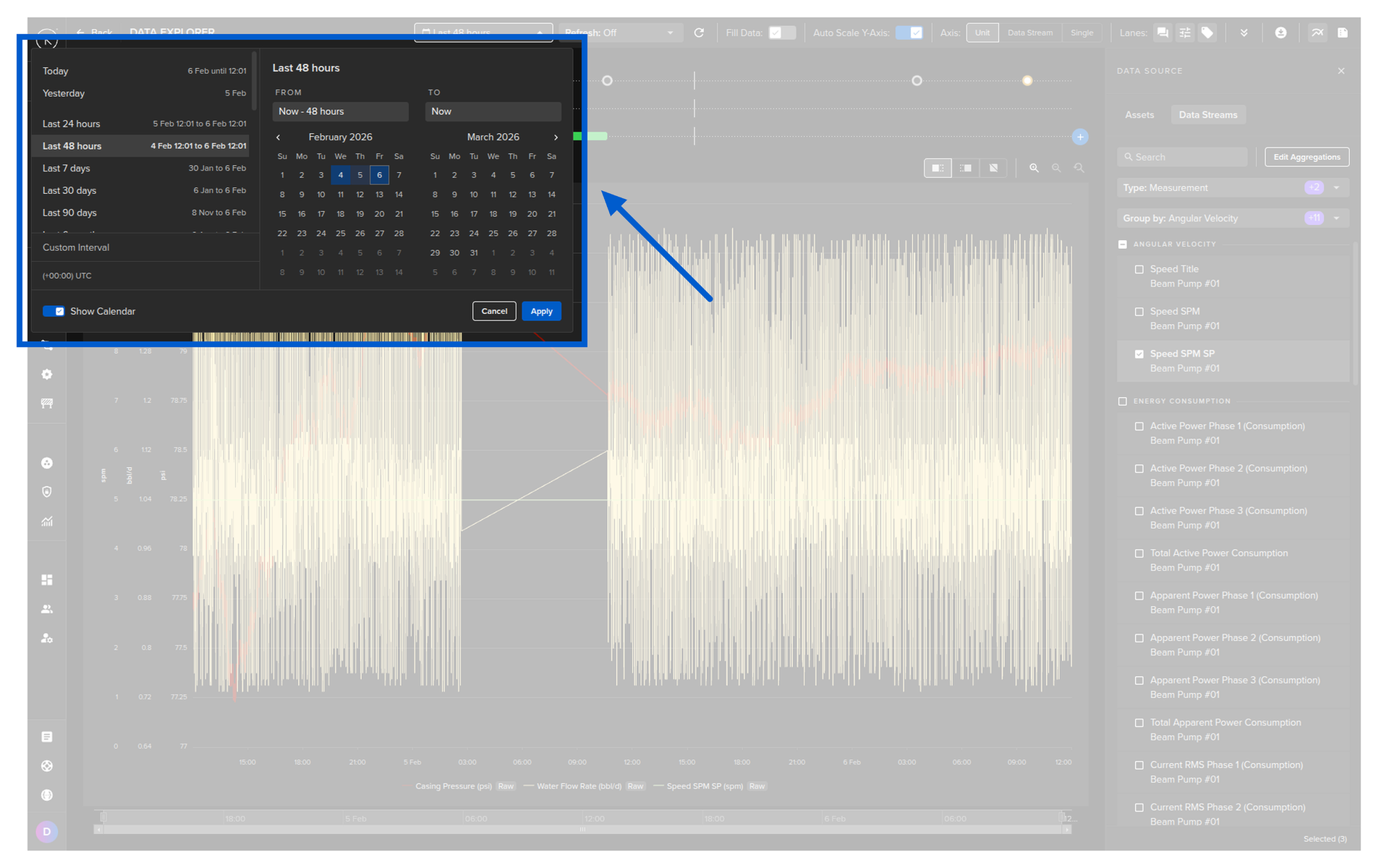
Many solutions will only show you the data in your own timezone or the time of recording.
Kelvin gives you the option to select what timezone you want to view the data. The data will be adjusted accordingly as it is recorded with the timezone data too.
This makes it very useful if your assets or team are in a different timezone and you want to sync your information, communications or reports with multiple timezones.
You can select your own timezone just below the Custom Interval option.
You can also view multiple Assets and their associated Data Streams all together and synced to the same time.
You still have the related control changes and recommendations shown on the top that allows you to get the most information on what is happening to your assets at any time.
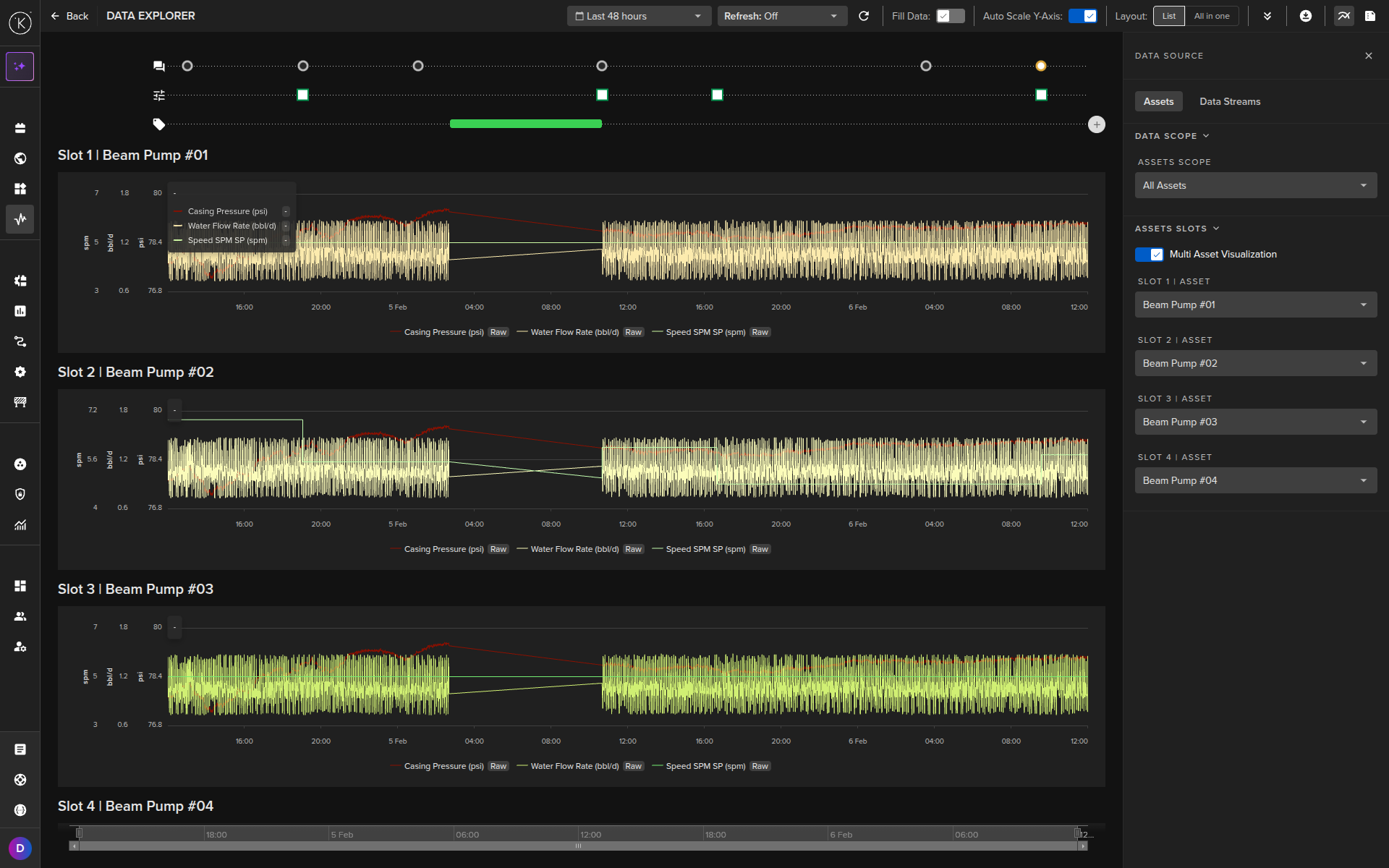
Raw Data View
Automatic Data Aggregation
To maintain system performance and Data Explorer readability, the Kelvin UI automatically aggregates data when large datasets or long time ranges are selected.
How Aggregation is Triggered: * Time Range: Aggregation is strictly enforced for any time range exceeding 7 days, overriding manual "raw data" selections. * Screen Density: The UI calculates the maximum data points displayable on your screen and selects an optimal interval based on available pixels.
Default Settings: * The system automatically uses Mean as the aggregation method. * The most appropriate predefined interval is selected automatically to ensure the chart remains responsive.
This ensures the chart never tries to render too many points, which would cause performance issues and make the chart unreadable.
When you select your Data Streams;
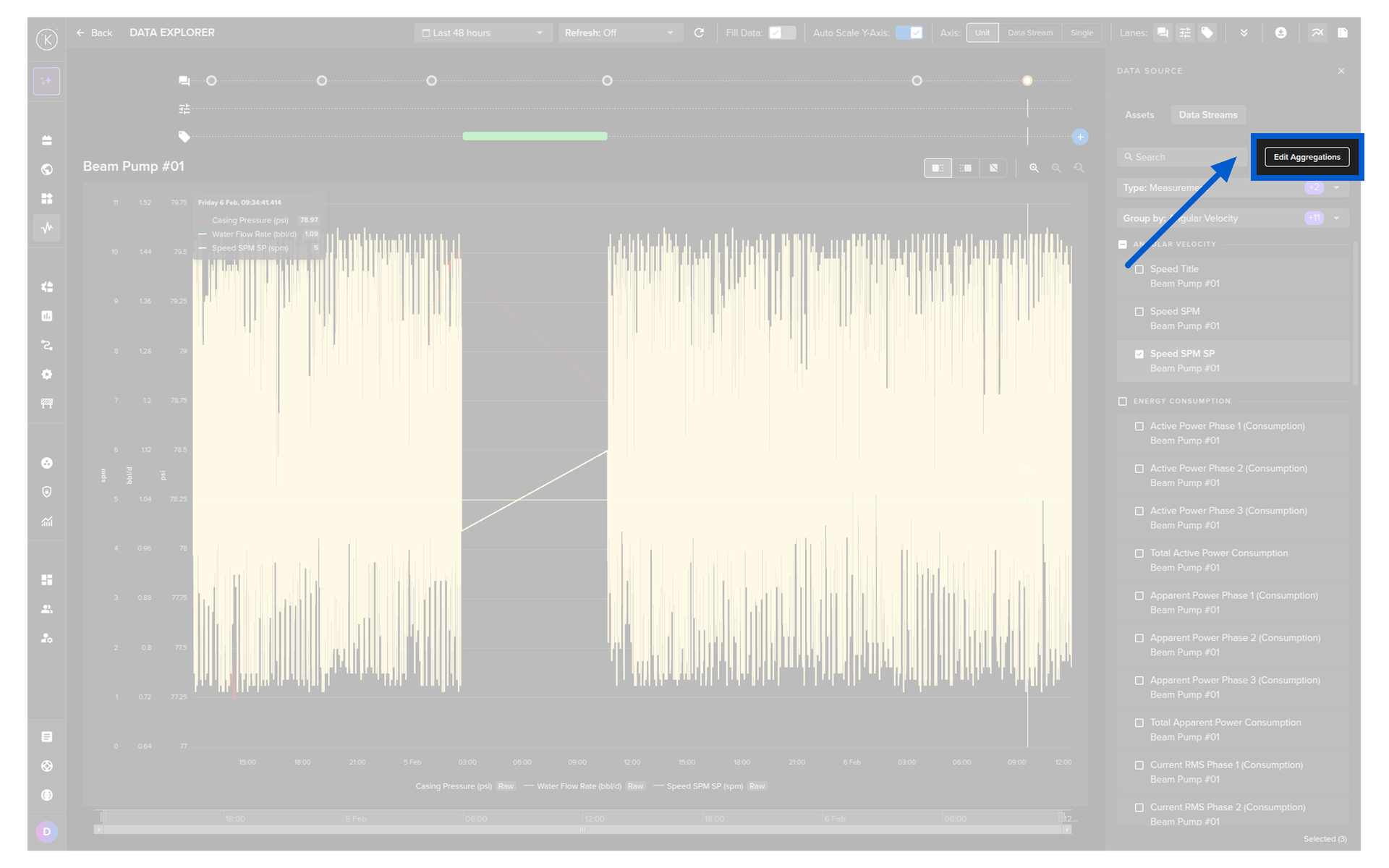
And select the type of aggregation for the Data Explorer in the popup;
You can select No Aggregation. This will show you the raw data.